
Responsible tails management
At Urenco, sustainability is embedded in how we manage nuclear materials across the fuel cycle. This includes the responsible treatment of depleted uranium hexafluoride (UF₆), commonly known as “tails”, a by-product of the enrichment process.
Our approach to tails management
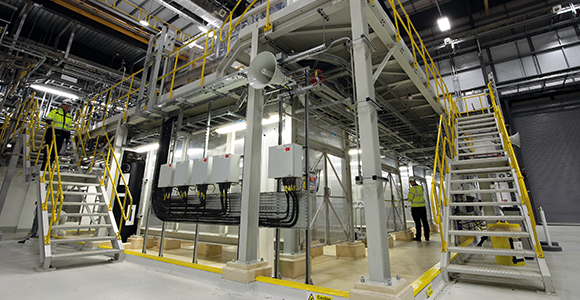
During enrichment, the concentration of 235Uranium is increased to produce fuel for nuclear power generation. The remaining material – tails – still contains usable uranium and can be re-enriched when it is commercially viable to do so. This approach supports the efficient use of natural resources and is standard practice across the industry.
When re-enrichment is not viable, tails are safely stored or prepared for long-term management through deconversion. Urenco has invested in a multi-million pound Tails Management Facility, which provides dedicated capacity for the deconversion of tails from our European enrichment sites.
Operating since 2021, the facility plays a key role in our long-term approach to nuclear stewardship, ensuring materials are managed safely, securely and responsibly. All activities are carried out in line with strict international safeguards and non-proliferation requirements.
We are very proud of the safety record during the TMF’s construction - more than seven million hours of safe working were achieved, making the TMF one of the safest construction sites in the UK.
KEY FACTS
Tails Management Facility
Began operation
2021
Tonnes of uranium deconverted
Over 650,000
Number of barrels processed
Over 65,000
Deconversion process
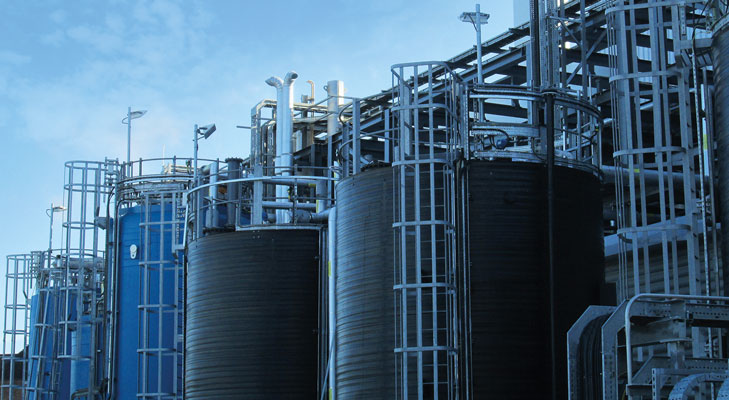
The deconversion process changes the by-product of our enrichment operations (known as tails) into a more chemically stable form that is suitable for long-term storage and potential future use. Our UK Tails Management Facility is dedicated to this process, which is described below:
Our by-product - uranium hexaflouride (UF6) - arrives at the facility in solid form.
UF6is heated and turned into a gas.
The gas is reacted with steam in specially designed units to produce uranyl fluoride (UO2F2) and hydrogen fluoride (HF).
UO2F2 is then reacted with more steam to form uranium oxide (U3O8), which is a stable powder, and hydrofluoric acid (HF).
Uranium oxide (U3O8) is packed into secure containers for safe, long-term storage.
Hydrofluoric acid (HF) is processed and supplied for industrial use.
This controlled process ensures the safe handling of materials while supporting circular use wherever possible. Watch our video to take a virtual tour of the TMF or download our factsheet to learn more about our deconversion process.

Supporting wider industry
The hydrofluoric acid produced during deconversion is reused across several industries. It is commonly used for:
Treating and cleaning metals
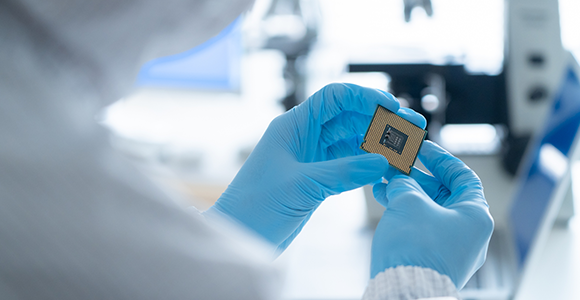
Etching and processing glass and electronics
Removing impurities from materials
Manufacturing refrigerants and other fluorine-based products
By recovering and supplying this material, we help reduce waste and contribute to wider industrial supply chains. A carbon footprint audit we conducted of the TMF showed that the hydrofluoric acid we produce has an estimated carbon intensity of only one third of that produced via traditional means.